As we rapidly approach our 1 millionth electric kilometre, we thought it was high time…
Our Tenth Winter Of Electric Airport Transfers
It’s a sad day at Cool Bus HQ. The time has come to say goodbye to a long standing member of our team. A quick scan of our driver roster this winter shows that over half have worked more than ten seasons for us. All of our office staff can say the same but this is the first time we’ve had a vehicle make it into double figures.
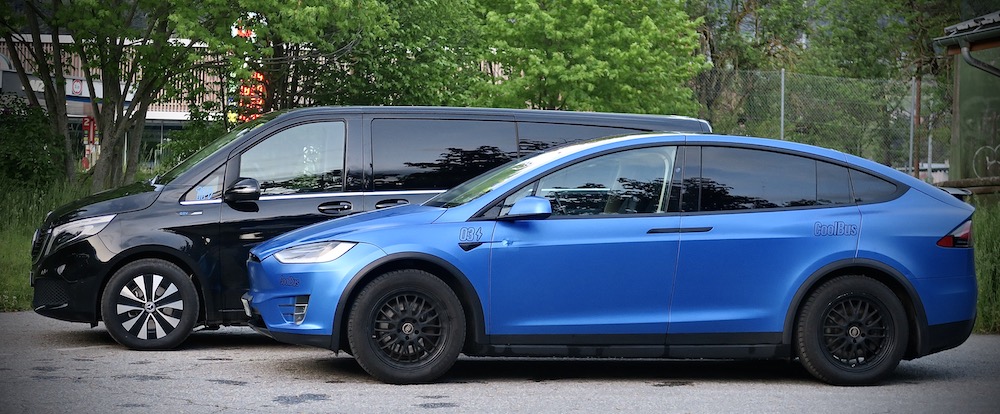
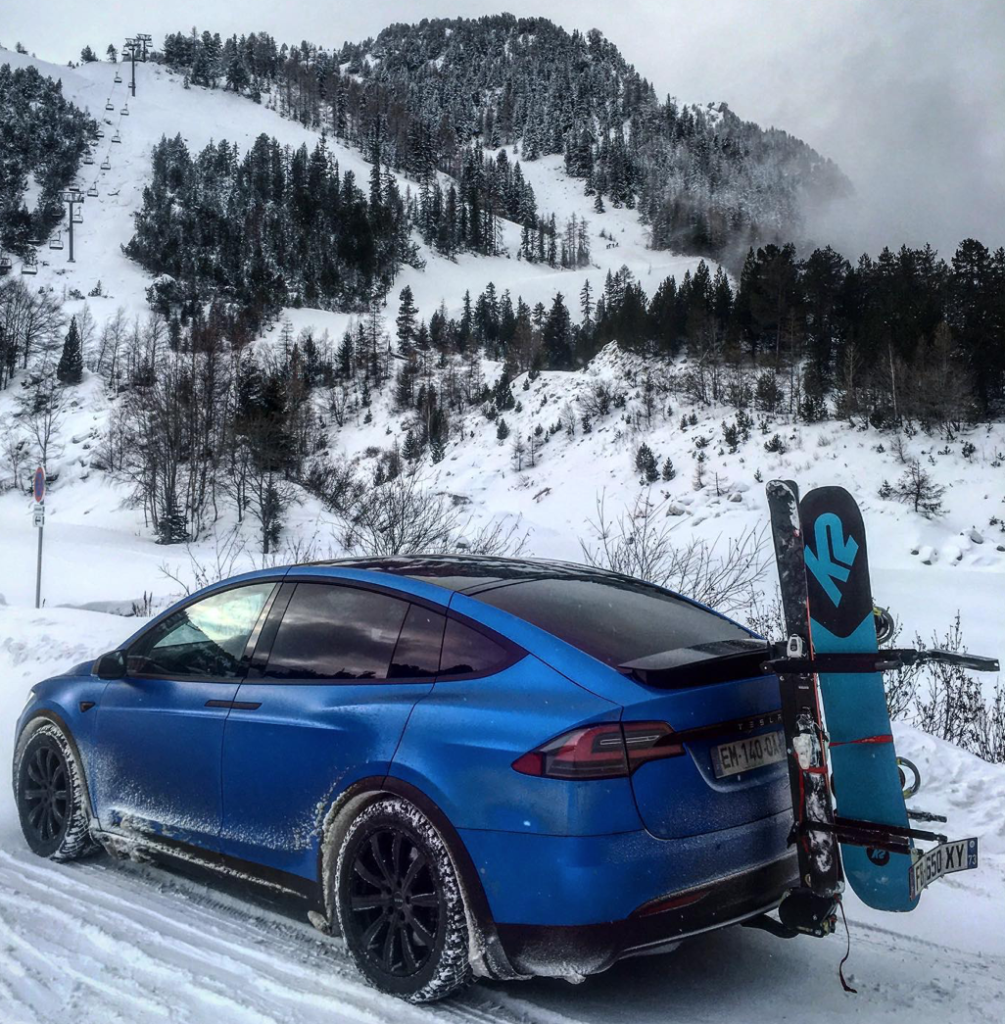
T1 is our oldest electric car. It still drives just as smoothly as the day we bought it. Still does 0-100kmph in under 4 seconds. The aluminium bodywork, which has been under 3M vinyl wrap since new, is in excellent condition. It has done 300,000 km but the original battery is still working fine with just 17% degradation. The electric motors continue to provide a smooth power transfer to all four wheels and the leather interior shows little sign of wear. So why sell?
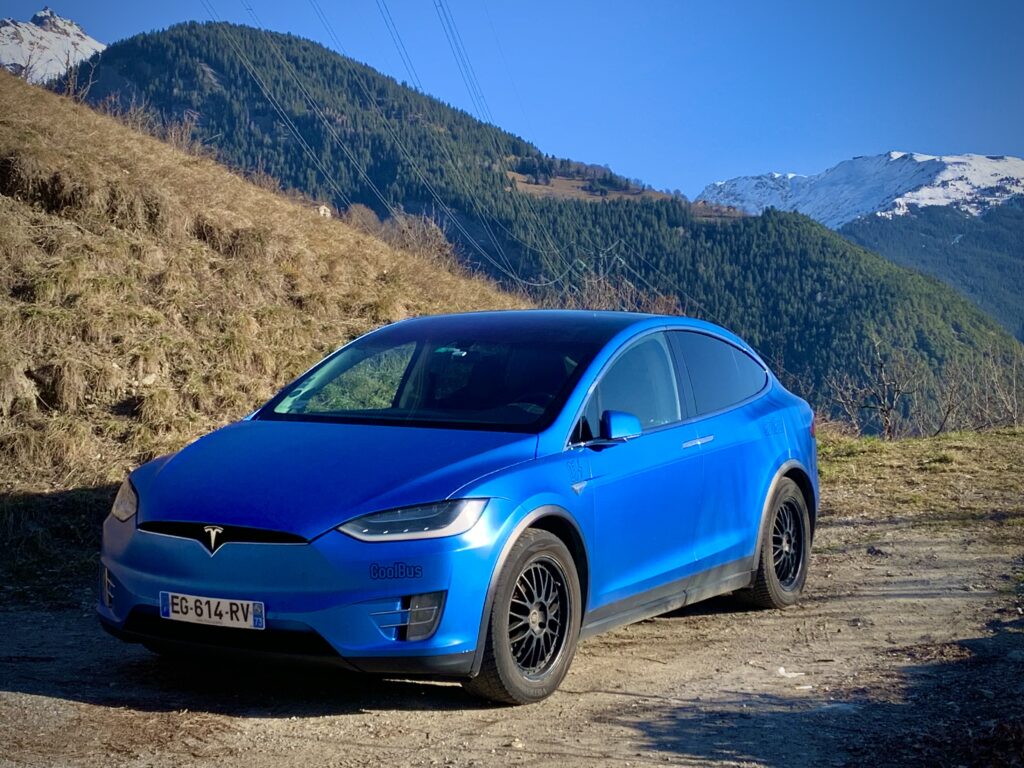
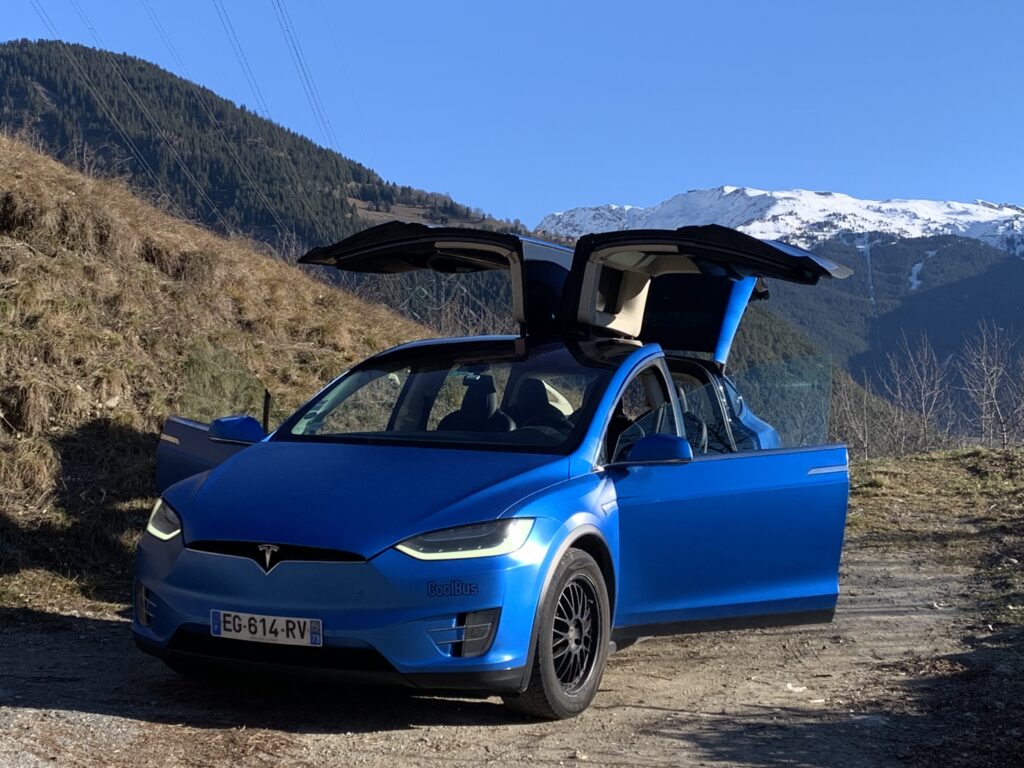
In the late 2010’s, when we bought our three Tesla Model X’s, we were running a fleet of twenty four vehicles. These days we are down to ten and, with a lower volume of work, we also have less demand for transfers of four or less passengers. The Model X is a 7 seat vehicle but we keep the two rear seats folded to allow for baggage space.
Ten years ago there really was no other electric vehicle on the market that suited our needs – lots of space for baggage and people but also 350 km+ battery range. These days the Mercedes EQV and E-Vito minibuses have filled that gap perfectly and make up 60% of our current fleet. As such, we really only need one Model X to fit our current business mix.
T1 joined the Cool Bus fleet in 2016. It was one of the first Model X’s to be sold in Europe. When I ordered it there were no vehicles available to test drive. It was all based on photos, some stats and a drunken conversation with a Tesla employee at a friends wedding – certainly a leap of faith. I was twitching a little on those first few transfers while we figured out what the real world range was, how many people and suitcases we could fit in and how the charging was going to work.
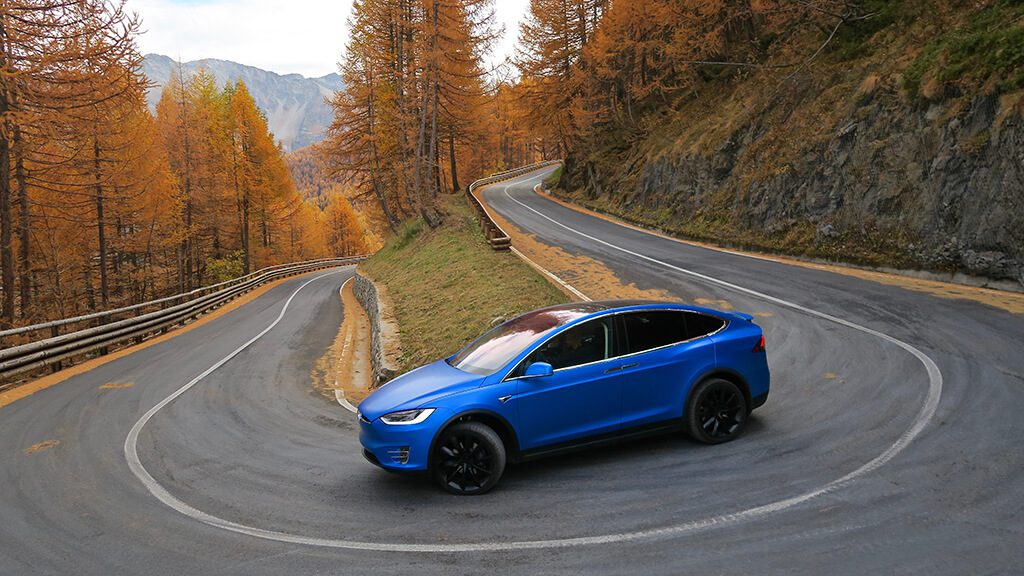
But it all came together and after clocking 40,000 km in that first season I decided to buy a second, and then, another year later, a third Model X. Between them they have driven nearly a million electric kilometres (965,000 km to date). We have had one battery failure in that time, actually on the newer of the three. This was replaced for free under warranty by Tesla with a unit that had been recycled. Our original battery went off to be recycled might now be fitted in someone else’s Tesla.
Buying that first Model X was a gamble and certainly not a cheap one. T1 set us back an eye watering 120,000 euros. The same vehicle can be bought today for 100,000 and that’s often how these things work. A company has a new product to bring to market that they poured millions of dollars of R & D into, so they set the price high for the first models but offer additional benefits to early adopters. For the Model X this included free supercharging for the life of the vehicle. This benefit will be transferred over to the new owner when we sell it along with the free data contract. Over the course of the last ten years this has saved us more than the 20,000 euros in charging costs.
Back in 2016, Tesla supercharging really was key to making electric transfers work. The charging infrastructure we used consisted of a 3-phase socket at our base in Bourg and one Tesla station at Archamps near Geneva airport. That was literally it. Frankly, the idea of relying on just these two brings me out in a cold sweat today. Fair to say that things look very different now. There are Tesla stations in and around all the big towns and cities we drive through. Our nearest is just 15km down the road in Aime. We even have high speed charging in Bourg. The days of worrying about getting to the next top up are long gone.
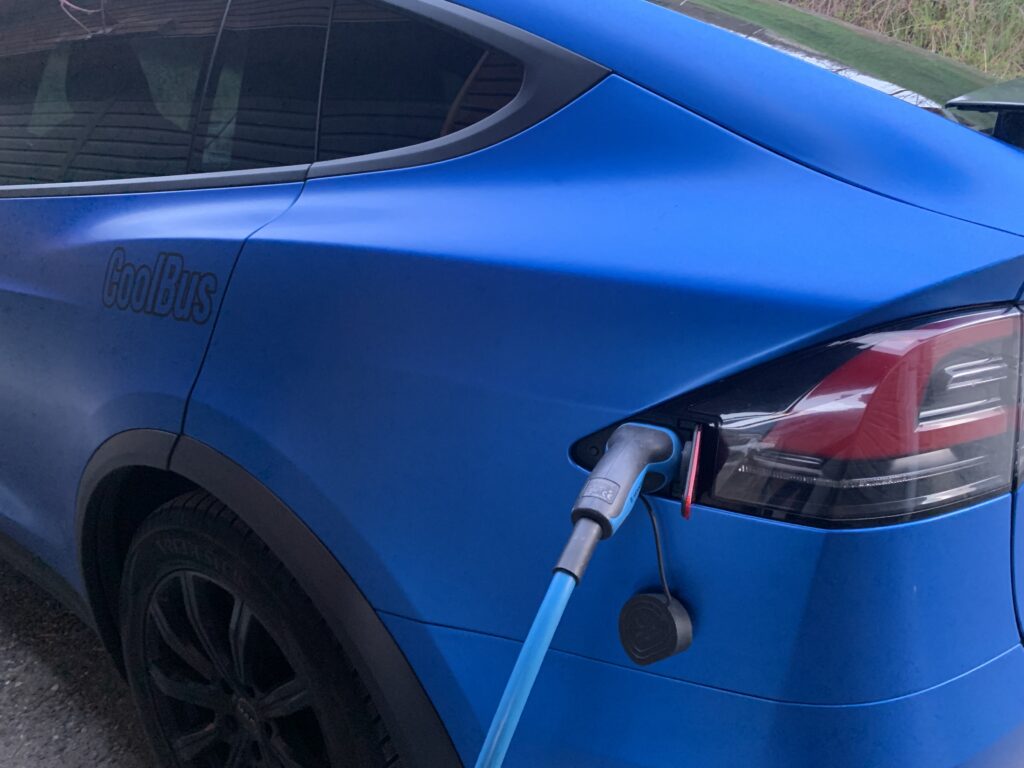
Which begs the question, why aren’t there more electric transfer vehicles on the road? Our fleet is now 80% electric. It would be 100% but our main summer work involves long distance mountain bike tours. Right now there are no suitable electric minibuses on the market that have the ability to tow a trailer but also sufficient battery range, weight being the limiter.
After ten years I think it’s safe to say we’ve proved that electric vehicles can work within the constraints of the airport transfer market and yet there is still only one other company in the valley which operates EV’s at a similar scale. Infrastructure is no longer an issue so what are the other factors?
A typical driving shift for us works something like this – drive up to a ski resort (our most popular are Tignes, Val D’Isere, Les Arcs, La Plagne, La Rosiere and Ste Foy), collect clients, drive to an airport (Geneva being the most popular though Lyon, Grenoble and Chambery all work for electric transfers these days), drop clients, charge vehicle for 45-60 minutes, collect clients, drive to a ski resort. We have to schedule in up to 1 hour for charging between each transfer. At first glance this looks like a big disadvantage to using EV’s but in practice the opposite is true.
An average driving shift can be anything from 7 to 12 hours long depending on traffic and flight delays with up to 10 hours of that spent behind the wheel when traffic is bad (as it frequently is on Saturdays). After 4.5 hours a driver should be taking a break of at least 45 minutes. When you operate with diesel vehicles it’s very easy for this essential consideration to fall by the way side.
This can happen in the planning stage – “we could fit in this extra new booking if we reduced the drivers turn around at the airport by 20 minutes” or on the day. I was reminded of this on the first busy transfer day this winter. As sometimes happens, traffic was worse than expected. We forecasted 4.5 hours with the expected traffic for a drive that might normally take 3 hours but it actually took 5. We don’t have the option to reduce the breaks of our drivers as the charging time at the airport is non negotiable so even on this busy day, all of our drivers had the full breaks that they needed. Worth noting that standing in arrivals waiting for customers for 45 minutes is not a break 😉
Once you discount the extra paid time spent charging then operating costs for an EV are actually pretty similar, possibly slightly cheaper. We mainly use Tesla charging stations which are very reliable and where costs are in the 30-40 cents per kWh bracket. Maintenance costs on our newer Mercedes EQV’s have been close to zero. Naturally that increases as vehicles age. T1 recently had a new air compressor fitted for it’s air suspension at a cost of 2000 euros for example. Averaged across the fleet however, this balances very similarly to diesels.
Vehicle insurance costs are similar between the Tesla and diesel VW’s but considerably cheaper for the electric Mercedes. Why? This is down to the all important ‘puissance fiscale’ figure (power rating). A VW Caravelle comes in at 9 whereas the Mercedes are only 5. This absolutely does not translate to lower performance, in fact the opposite is true. The EQV’s accelerate quicker and show much less loss of power when climbing up to resort fully loaded. So why is the puissance fiscale lower? Not sure and I’m certainly not going to contact our insurer to query it so I’ll just say “blah blah torque vs horsepower blah blah science” and hope you are happy with that!
I believe the key factor putting other operators off is vehicle cost. We pay around 50% more for our Mercedes than we would currently pay for a diesel VW Caravelle. On the plus side, they are certainly a more luxurious vehicle. EQV’s come in full leather with individually reclining seats and EV’s in general just give you a smoother ride. The level of service we offer these days has certainly increased but that has come at a cost. One of the many fallacies you see online with regard to EV’s is that they depreciate more than their ICE counterparts. This has not been my experience, however the maths clearly shows that an EV costing 75,000 euros, depreciating 25% over the first year is costing you more than a diesel minibus costing 50,000 euros and depreciating by 25%.
Obviously this is going to have an effect on your profits. Actually let me rephrase that, this is going to have an effect on how easy it is to break even each year. Profit feels like more of a Pre-COVID concept to be honest. To put it very simply, you have diesels on one side offering better return due to lower vehicle costs and EV’s on the other offering a better level of service (including better rested drivers) and lower impact on the environment.
And here we come to the big elephant in the room. Despite overwhelming evidence to the contrary, the debate on how much better EV’s are for the environment still rumbles on. Most of the arguments against electric vehicles have been debunked over and over again (you may have spotted a few of these in bold above) but still seem to resurface regularly.
As such, I thought it would be useful to finish off this post with a few sums to show the estimated CO2 emissions of T1 during it’s Cool Bus lifespan versus a diesel SUV. In all cases I have taken the most conservative figures I could find. Reference articles are show at the bottom.
Manufacturing Emissions
Diesel SUV = (up to) 9 tons
Tesla Model X = (up to) 14 tons
Operational Emissions for 300,000 km
Diesel SUV
300,000 @0.075 litres diesel/km = 22,500 litres of diesel (7.5 litres/100km – conservative estimate based on the type of driving we do)
22,500 x 2.7kg CO2 per litre = 60,750 kg = 60.75 tons CO2
CO2 emissions from refining 22,500 litres of diesel = (at least) 7 tons
Tesla Model X
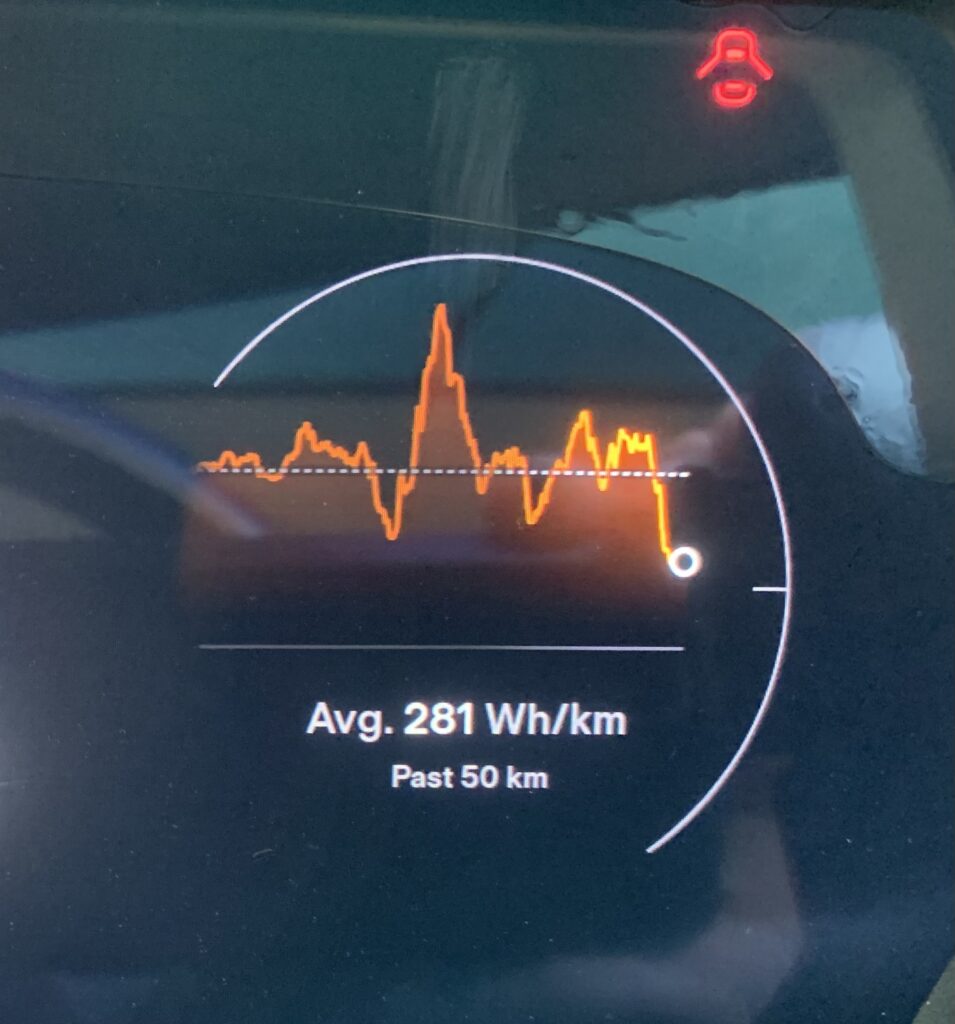
300,000 x 0.3 KWh/km = 90,000 KWh (30KWh/100km – actual figure based on the type of driving we do)
France eCO2 mix = 58 grams CO2/KWh (peak level of CO2 release during electricity production in winter based on France’s energy mix)
90,000 x 0.058 = 5220 kg = 5.2 tons
Totals
Diesel SUV = 9 + 60.75 + 7 = 76.75 tons of CO2 produced for 300,000 km of driving
Tesla Model X = 14 + 5.2 = 19.2 tons of CO2 produced for 300,000 km of driving
Cool Bus lifespan CO2 savings for T1 = 57.55 tons
To put this another way, over the course of 300,000 km our Tesla Model X has produced 75% less CO2 than an equivalent diesel vehicle.
https://www.recurrentauto.com/research/just-how-dirty-is-your-ev#:~:text=1
https://www.rte-france.com/en/data-publications/eco2mix/eco2-emissions
